
A Crochet Hook, a Road Trip & A.I. Walk Into a Binder...
A lifelong learner's unfiltered, slightly chaotic, absolutely joyful journey to launching Elemental Vibes — 10 tips to help you find your niche, using A.I. Spoiler alert: We’ve thrown in a free bonus tip at the end of the article.
*Lifestyle*Origin Story*Business Tips*A.I.*
8 min read
Let me paint you a picture. A kid sits in the back of an RV on a family road trip to California, somewhere between "Are we there yet?" and "I'm bored." Then, out of nowhere, an aunt hands over a crochet hook and some yarn — and suddenly, the entire universe shifts. That kid was me. And those pot holders? They were the first domino in a very long, very colorful, very binderful chain of events.
Grab your favorite drink, get comfortable, and let me tell you a story.
It starts on a highway, playing eye-spy with roadkill — yes, really — where my enthusiastic announcement of "I spy a skunk, dead in the middle of the road!" had everyone in the RV losing it.
It was also where I picked up a crochet hook for the very first time. I had no idea that one random road trip — complete with roadkill, yarn, and zero crochet experience — would eventually inspire an entire lifestyle brand and shop where I sold handcrafted accessories and apparel made by M.E..
In between? Curiosity, craft, a healthy dose of chaos, and one very important decision: choosing a niche.
(The practical stuff is coming. Stick with me.)
The Gifted & Talented Kid Who Couldn't Stop Learning
Before the pot holders, there was the nomination. Middle school. The Gifted and Talented program. Cue the dramatic orchestral swell. Being nominated for that program didn't just open a door — it blew the whole wall off the house. Suddenly, curiosity wasn't just acceptable; it was The point. Every subject became a treasure map. Every new skill was another X marking the spot.
And then came the road trip. And the yarn. And the epiphany.
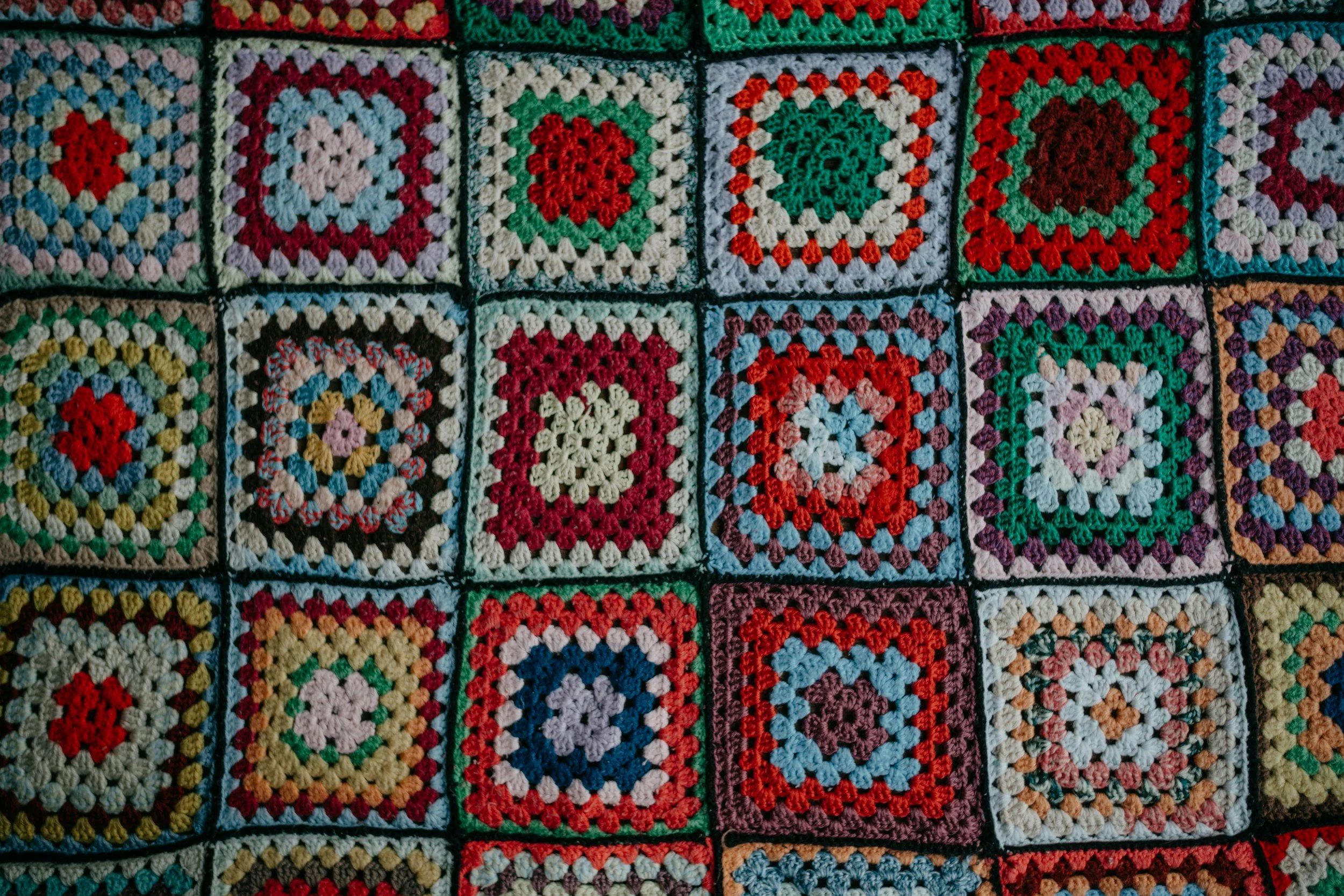
"WOW." That was it. That was the whole thought. I had just crocheted a square pot holder, and I felt like I had discovered fire.
Something colorful. Something useful. Something my grandma and mom would actually use — for years. That feeling of being the creator of something tangible, something loved, something that outlasts the moment of making it. That feeling became a lifelong addiction. I needed more. I wanted to make more. The possibilities were absolutely limitless, and I had exactly zero chill about it.
The Pre-Historic Era of Learning (No, Seriously — Oregon Trail Vibes)
When Knowledge Required Actual Effort
Here's where I have to remind you younger readers of something important: this was the PINANDERTHAL of BINDEREST era. I mean before smartphones, before Google, before Pinterest existed to save you from your own impulse decisions. If you wanted to learn how to make something, you physically went to a library. You rifled through books. You found a magazine that maybe, maybe had a DIY article sandwiched between a casserole recipe and a horoscope.
DIY content was rare. Instructions were guarded like state secrets. And yet — my quest for learning only grew stronger.
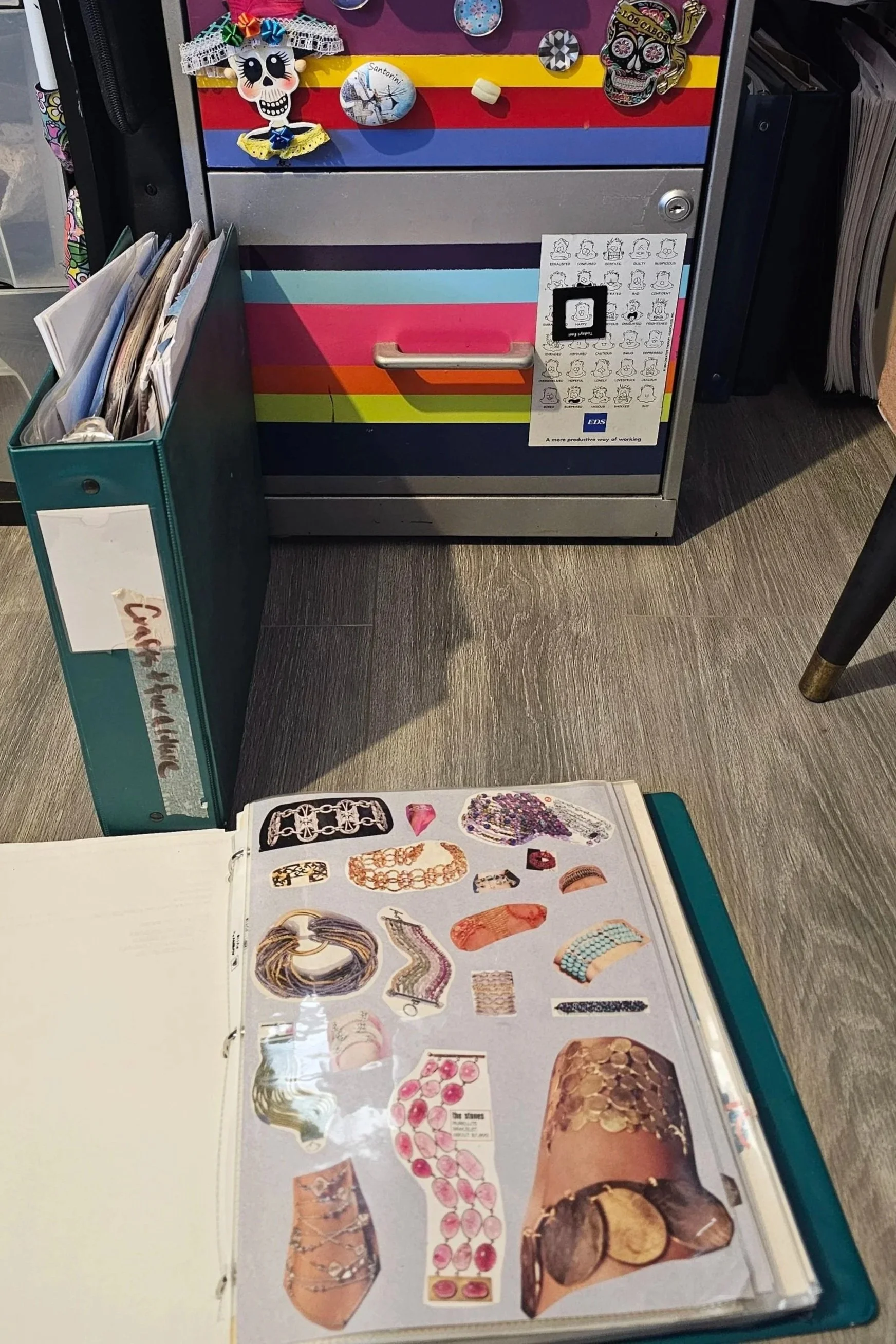
Pinanderthal of Binderest (pin·an·der·thal of bin·der·est) /pɪˈnændərθɑl əv ˈbɪndərɛst/
noun | informal, humorous
A pre-digital mood boarder who, long before the internet existed, curated inspiration by hand — collecting magazine clippings, DIY articles, and paper ephemera into an ever-expanding binder system. Considered the original architect of the mood board algorithm, powered entirely by scissors, glue, and sheer determination.
Origin: compound of Pinanderthal (a play on Neanderthal + Pinterest) and Binderest (a portmanteau of binder + Pinterest) | first documented use: pre-Wi-Fi era, kitchen table, approximately 11pm on a weeknight.
Related forms: Pinanderthalic adj. — "her organizational system was deeply Pinanderthalic" Binderesting v. — "she spent the weekend binderesting her entire craft collection"
See also: binder, scissors, three-hole punch, Pinterest (the lesser, digital successor)
I collected hard copies of every article that sparked my interest. Binder after binder after binder. If you are imagining one of those accordion folders exploding at the seams, multiply that by approximately twelve and add a filing cabinet. Every magazine I collected was not hoarding — it was a curated archive. An analog Pinterest board or a Binderest (Binder + Pinterest) board as I like to call them. A physical mood board before mood boards were cool.
The irony? I went to school for Computer Science. Computer Science! And yet, there I was, lovingly three-hole-punching articles about macramé and sourdough starters instead of surrendering them to the cloud! Listen — some of us resist change dramatically and then embrace it fully. That's called character development.
Eventually, I made peace with technology. I condensed my hard copies by photographing the pages I absolutely couldn't live without. Full circle, baby. Oregon Trail meets the digital age.
Many Skills, Much Chaos, Zero Regrets
I genuinely do not know what I am more addicted to — the art of learning something new, or the smell of new materials and tools for whatever hobby I just discovered at 11pm on a Tuesday.
The Making of a Self-Proclaimed Polymath
Years passed. Skills accumulated. Some I mastered. Some I attempted with great enthusiasm and questionable results. And some? Some I absolutely vibed out, and that's the only way I know how to describe it.
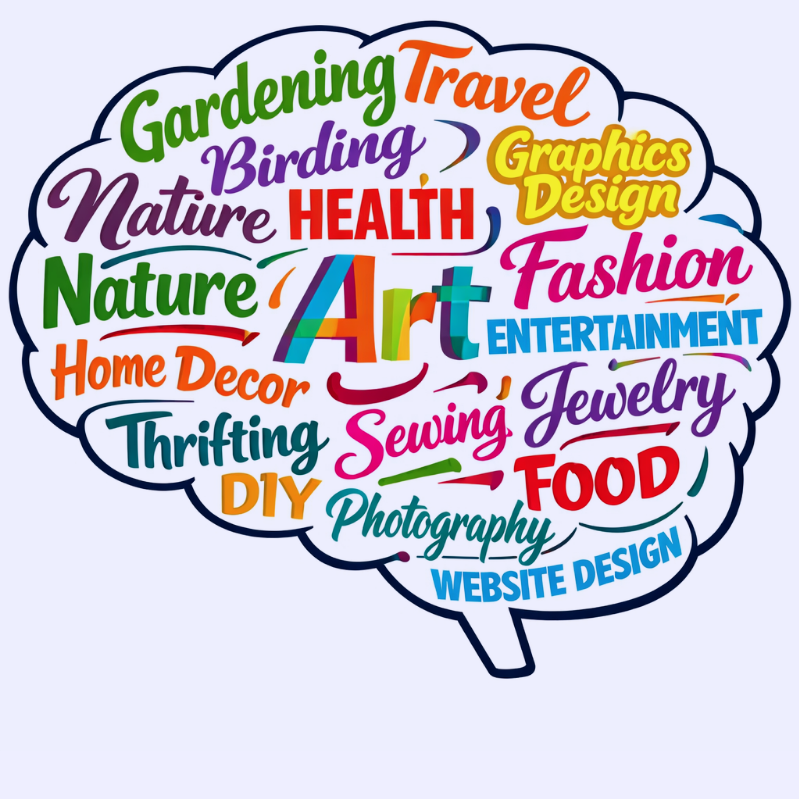
I am — by every definition — a Hobbyist of Many and a Master of Most. A self-proclaimed polymath. Someone whose interests refuse to stay in their lane. University trained in Computer Science and Mathematics. Passionate about jewelry. Equally experientially passionate about art, web design, graphic arts, photography, travel, nature, birding, gardening, billiards, and entertainment.
On the family-instilled side? Fashion, style, event planning, home décor, cooking, baking, thrifting, sewing, and health. Not to brag, but if there were an Olympics for "people with too many interests," I would at minimum place in the top three.
The Digital Age Saved Me (And It Can Save You Too)
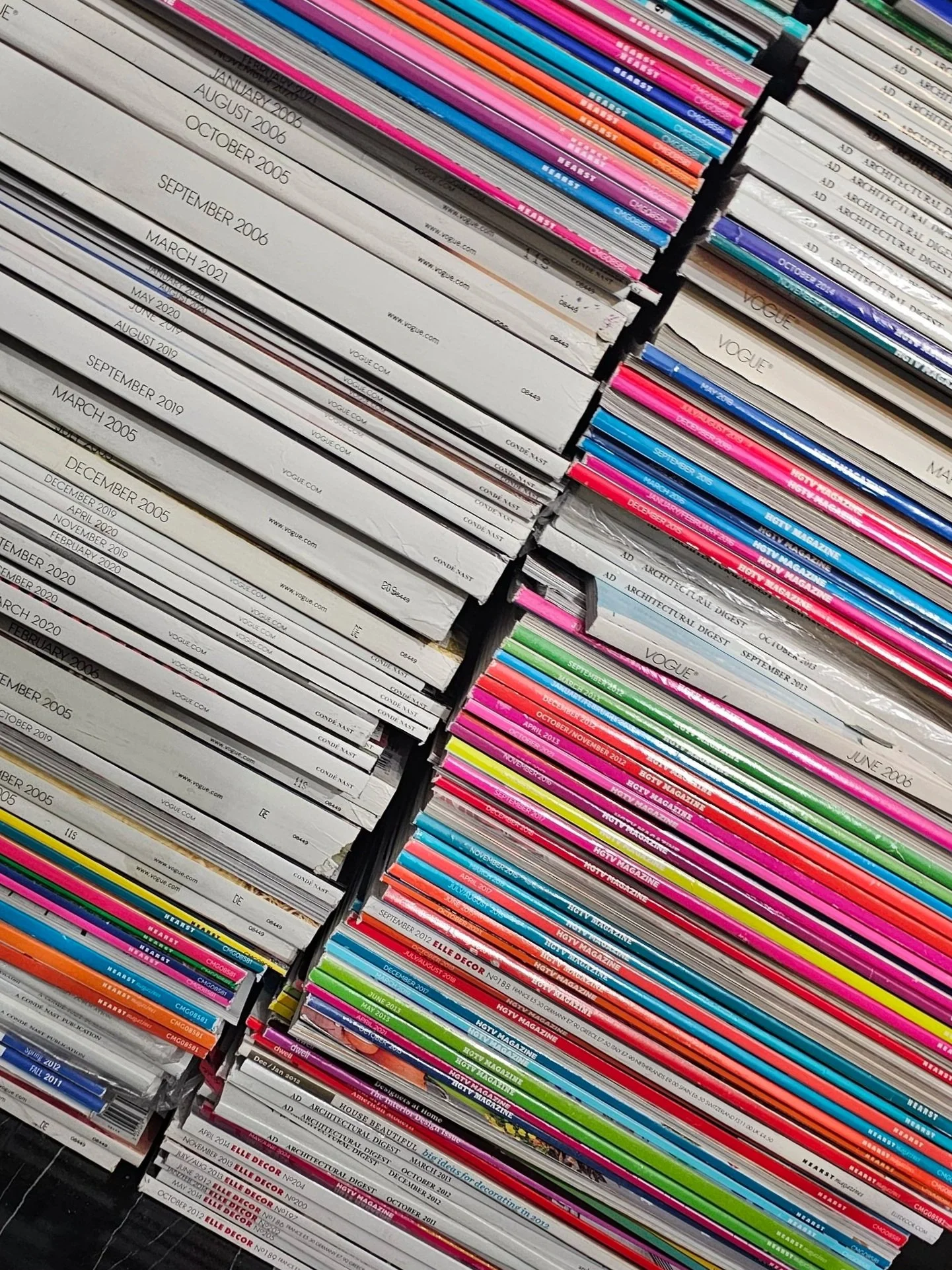
BINDSPIRATION
Where you would find ideas for your Binderest Boards.
Finding a Niche in the Age of Too Many Options
Thank goodness this is the digital age. No more microfiche. No more squinting at library catalogs. YouTube tutorials and blogs exist, and they are beautiful, and I love them.
When I decided to launch Elemental Vibes, I did what every modern entrepreneur does: I dove into research. YouTube videos. Blog posts. Podcasts. And the advice was nearly unanimous from every corner of the internet:
First, claim your primary niche — the broad category that covers what you're about.
Then narrow it down with a sub-niche that cuts through the noise and gets specific about your focus, your style, and what sets you apart.
Something you're interested in. Something you
won't get tired of talking about. Something that feels like you.
For someone with approximately twenty active interests at any given time, this was... a process. A lengthy, coffee-fueled, binder-adjacent process.
After much soul-searching (and a few very long walks), I arrived at my answer: a lifestyle blog, specializing in SOME sub-niche. A space where all the threads come together — the jewelry, the craft, the learning, the business, the technology, the inspiration, — without forcing any single thread to carry the whole weight.
Okay. So you’ve done the soul-searching. You’ve audited your skills. You’ve stared at the ceiling at 2am asking yourself the big questions. And somehow, you still have seventeen viable niche ideas and zero clarity. This is exactly where I was — and this is when I turned to A.I. to help me cut through the noise.
I’m not talking about AIin some vague, buzzword-y way. I mean I sat down with Claude.aiand had a real, structured conversation that helped me move from a sprawling list of passions to an actual direction. Here’s exactly how I did it:
Stop Guessing and Start Prompting
The first thing I learned about working with AI is that the quality of what you get out is entirely dependent on the quality of what you put in. Vague question, vague answer. But a well-built prompt? That’s where things get interesting.
My first move was to give Claude.ai some real structure to work with. I didn’t just type “What should my niche be?” — because that would be like walking into a library and asking for “a good book.” Instead, I built a prompt with specific parameters:
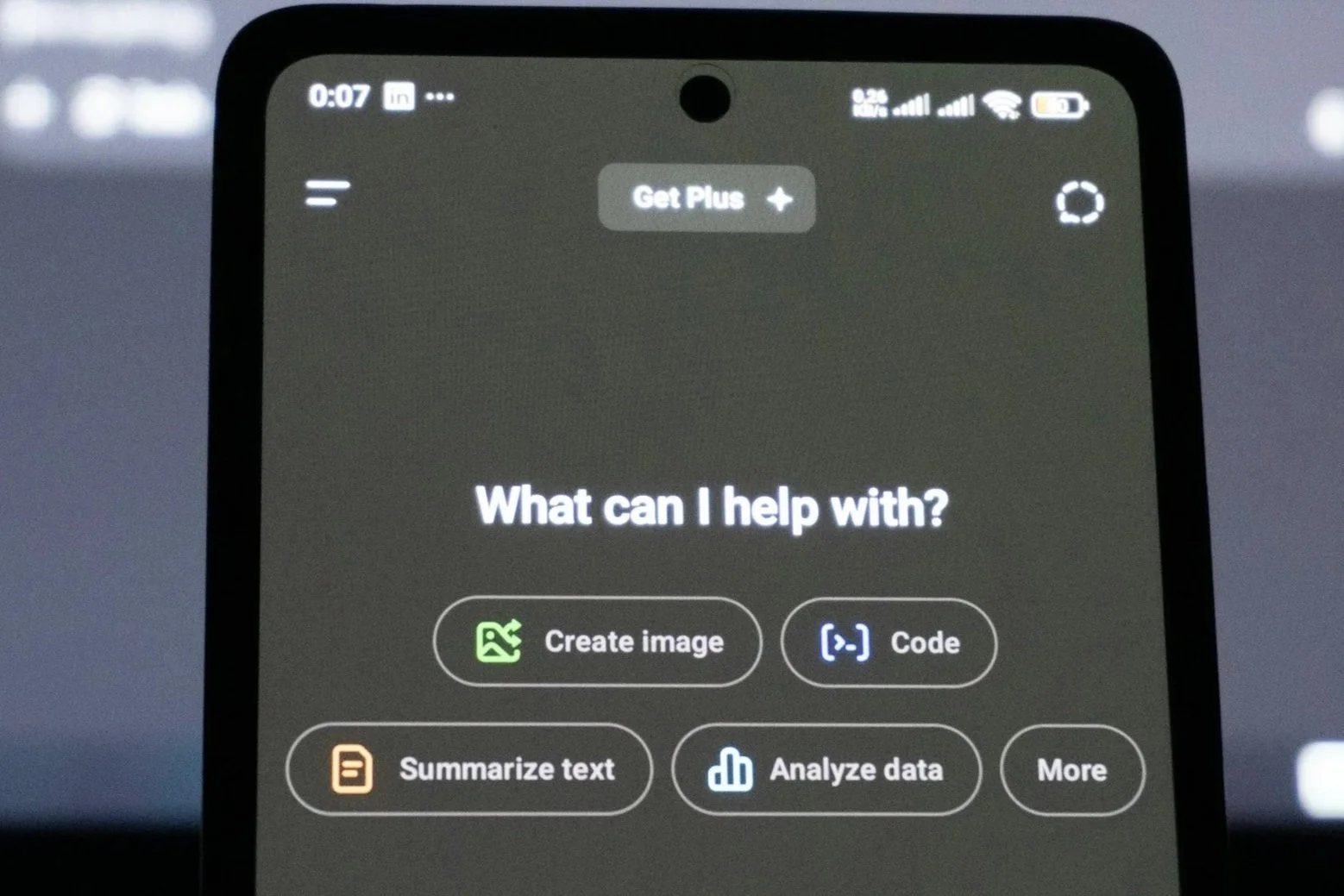
“Give me a list of top 20 suggested niches that align with my interests. The niche must include [primary category(ies)] as a primary niche, and use the following list of skills and interests to form a sub-niche.”
-M.E. ~ Elemental Vibes
Then I listed everything. All of it. The jewelry. The technology. The crafts. The cooking, the photography, the gardening, the thrifting. Every skill formally trained and every one accidentally acquired at an unreasonable hour. I didn’t filter or second-guess myself at this stage — I just dumped the full, messy, glorious inventory of who I am onto the screen and let the AI do what AI does best: find the pattern in the chaos. And just like that — ABRACADABRA!
A comprehensive list of sub-niches appeared right before my eyes. Catchy, useful, and razor-relevant — the kind of ideas I genuinely wish I'd thought of myself. But let's be real: coming up with that list the old-fashioned way would've required a dangerous amount of coffee, a graveyard of dried-out pens, and at least two overstuffed binders.
And that's exactly the point. The hard part — the brainstorming, the second-guessing, the "is this even a good idea?" spiral — doesn't have to slow you down anymore. So now that you've seen what's possible, let's put it all together.
Choosing Your Niche: 10 Practical Tips to Get You Started
If you're in the process of starting a new business and you don't know where to begin — I feel your pain. The struggle is real. But you've got to start somewhere, and choosing a niche is the right first step. Here's what I've learned:
Start With What You Already Can't Shut Up About
What do friends and family come to you for? What topics make you talk for 45 uninterrupted minutes without realizing it? That involuntary enthusiasm is a clue. Follow it.
Audit Your Skills, Both Formal and "Accidentally Acquired"
List everything you know how to do — including the things you learned from a random YouTube rabbit hole at 2am. University degrees and family-taught traditions are both fair game. You likely have more expertise than you're giving yourself credit for.
Find the Intersection of Passion, Skill, and Demand
The sweet spot for a sustainable niche sits where what you love, what you're good at, and what people are willing to pay for overlap. Run every candidate niche through that filter.
Research the Market Before You Commit
Spend time with keyword research tools, competitor blogs, and social media trends. Is your niche being searched for? Is there an audience actively looking? Passion without an audience is a diary — valuable, but not a business.
Think Specific, Not Broad
"Health and wellness" is a category. "Sustainable wellness routines for busy creative entrepreneurs" is a niche. The narrower your focus, the easier it is to stand out, attract the right audience, and become the go-to voice in your space.
Consider Your Long-Term Staying Power
Ask yourself honestly: will you still want to talk about this topic two years from now? Five? Trends come and go. Choose a niche that excites you long-term, not just during your current hyperfixation phase. (We've all been there.)
Validate With Real People Before You Launch
Before you build anything, share your idea with a small group of real humans — friends, social followers, or an online community. Their reactions, questions, and objections will tell you more than any algorithm can.
Look for Underserved Audiences Within Bigger Markets
Often the best niches aren't brand new ideas — they're familiar ones served to a specific audience that's been overlooked. Who is the existing market not speaking to? That gap is your opportunity.
Don't Wait for Perfect — Start, Then Refine
Your niche will evolve. The Elemental Vibes you're reading right now is the result of iteration, not a single lightning-bolt decision. Choose a direction that feels right, begin creating, and let the audience and your own instincts guide you toward refinement.
Give Your Niche a Personality — Especially Yours
Two people can occupy the same niche and still be completely distinct because of voice, perspective, and lived experience. YOU are part of your niche. Don't iron out what makes you interesting in an attempt to sound "professional." That quirky, colorful, binder-collecting, pot-holder-crocheting version of you? That's the differentiator. Lean in.
(Bonus Free Tip) Give In To A.I.! - It might just be the solution you are looking for and just don’t know it yet!
If you are anything like I was, you are still writing your shopping list by hand and frowning everytime you hear the letters A and I together in the same sentence. Don’t sit there and ask yourself “When will we be over this trend?”. Instead, embrace this as your chance to learn something new before the universe leaves you in the dust. Believe me, you will be thanking yourself SOONER than LATER!
This is just the beginning. Come back next week when I share the list of niches that were tailored for Elemental Vibes and what I chose to go with.Subscribe to Elemental Vibes and follow along as I tackle Google AI, Squarespace, Kittl, and whatever rabbit hole comes next. Every newsletter is a little story, a new skill, and proof that it's never too late to start something.
👉 Subscribe below — your next hobby is waiting.
Found your own A.I. niche? Tell me about it in the comments.
*This page contains affiliate links. My canasta fund thanks you!
** I used Claude.ai in this post because I feel it gives me more thoughtful solutions in this context but will be transitioning to Google AI (Gemini) to see what I like better. Stay tuned . . .
